



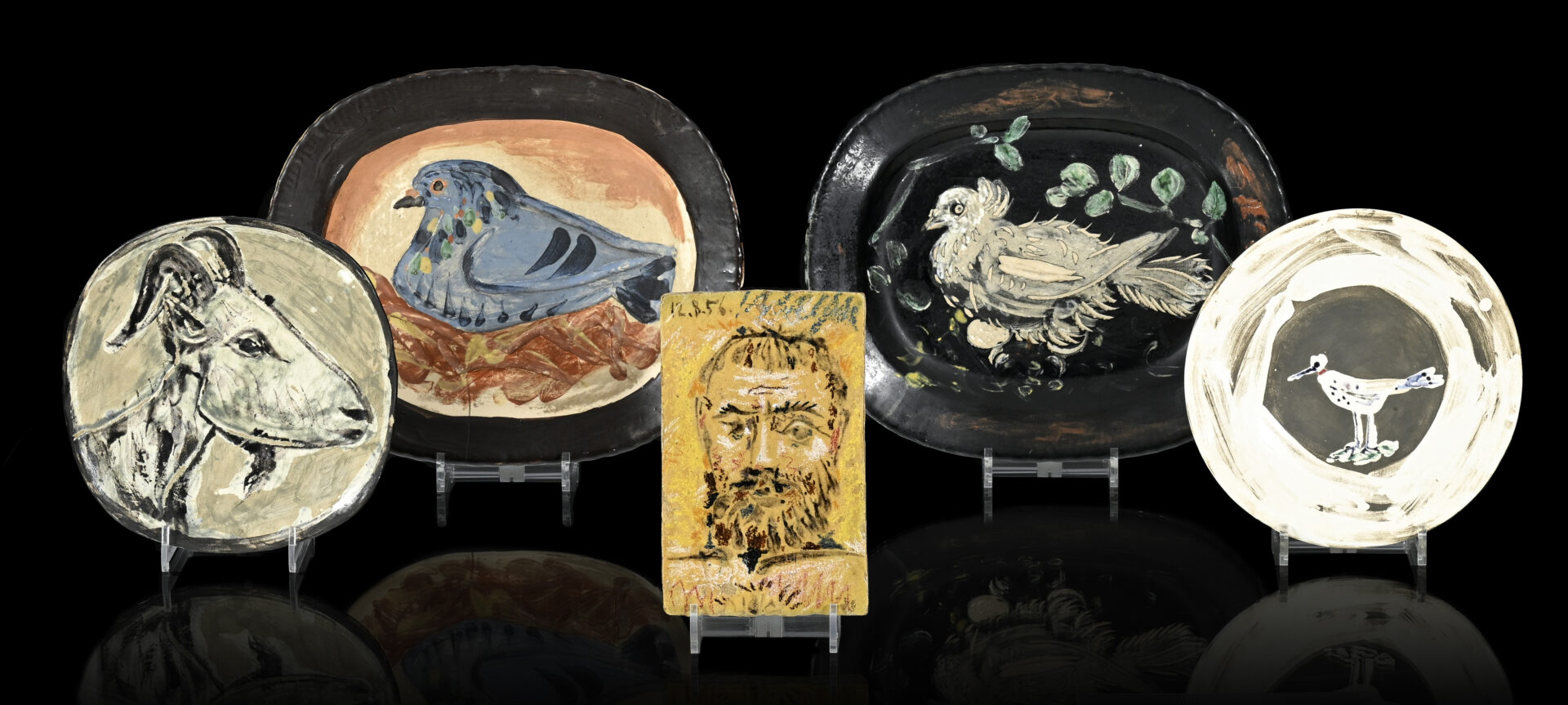
Piguet Auction House will sell 7 never before seen Picasso ceramics in Geneva on June 19, 2025, revealing rare works from the artist’s private estate.
Piguet Auction House in Geneva will auction off seven unique and never before seen ceramic works by Pablo Picasso on the evening of June 19, 2025. These extraordinary pieces preserved for decades in a single family’s private collection have never been offered on the art market before.
This upcoming auction marks a significant cultural moment, as it introduces to the public a set of ceramics that reflect Picasso’s pioneering work in the medium during his collaboration with the Madoura workshop in Vallauris, between 1947 and 1963. These rare ceramics were gifted by Picasso’s estate and have remained within the same family since their creation, making their debut in the art world particularly notable.
Bernard Piguet, Director and Auctioneer of Piguet Auction House, expressed his excitement:
“We are honoured to present this exceptional collection of seven unique ceramics signed by Pablo Picasso. These works capture the vitality of Picasso’s innovation in ceramics a medium he helped elevate to the realm of fine art.”
Artistry in Clay: Picasso’s Madoura Period
Between 1947 and 1971, Picasso immersed himself in ceramic work at the Madoura studio, embracing it as a fresh form of creative expression. Moving beyond utilitarian functions, he reshaped ceramic art into sculptural masterpieces, employing techniques such as glazing, engraving, slip casting, and hand painting.
The upcoming auction highlights seven one of a kind pieces from this prolific era, with motifs that reflect recurring themes in Picasso’s artistic language particularly symbolic animal figures like goats, bulls, birds, and fish. These animals were not just decorative choices; they embodied deeper meanings such as peace, power, motherhood, and freedom.
Highlights of the Collection: Unveiling the Unique
The centrepiece of the collection is Chèvre (Goat), circa 1950 a round square faience plate adorned with black glazed relief lines on a grey background. It is marked with “Madoura Plein Feu” and “Empreinte originale de Picasso,” underscoring its authenticity and singularity.
The six other ceramics include:
- Pigeon (c. 1949) A knife engraved faience plate symbolizing peace.Estimate: CHF 30,000 – 50,000
- Oiseau (June 2, 1963) A painted faience plate featuring a stylized bird, reflective of Picasso’s late period spontaneity.Estimate: CHF 15,000 25,000
- Trois poissons (c. 1952) A vibrant composition of Mediterranean fish on white faience.Estimate: CHF 20,000 30,000
- Pigeon couvant (c. 1947) A hand engraved terracotta plate representing maternal themes.Estimate: CHF 30,000 50,000
- Tête d’homme barbu (August 12, 1956) A painted brick with colored slip depicting a stylized bearded head.Estimate: CHF 20,000 30,000
- Taureau (February 6, 1957) A hexagonal terracotta tile with a dynamic depiction of a bull.Estimate: CHF 15,000 20,000
Each piece was crafted with direct involvement from Picasso, ensuring their uniqueness none are reproductions or part of an edition.