



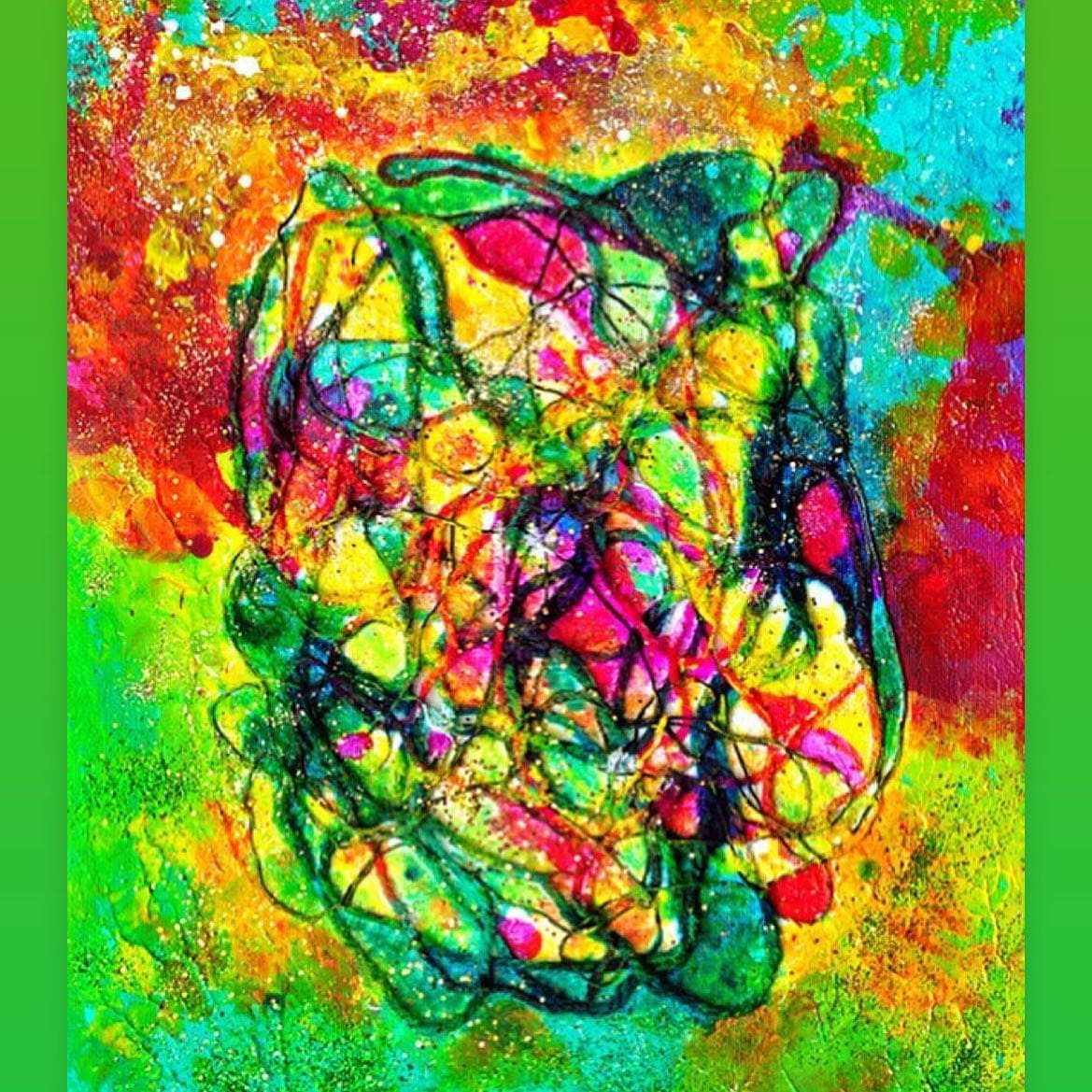
Nell-Lynn Perera is a multidisciplinary artist whose creative practice extends across painting, poetry, writing, art direction, modeling, and activism. At the center of her diverse body of work is a deep interest in emotional expression and the complex inner experiences that shape human life.
Her approach to art is deeply personal and intuitive. Rather than beginning with a predetermined image or narrative, she often allows her paintings to emerge through a spontaneous, trance-like process. Guided by movement, emotion, and instinct, she uses color and gesture to translate internal experiences into visual form.
The resulting works are primarily abstract, yet they often contain an emotional intensity that encourages viewers to look beyond literal representation. Through acrylic, ink, and watercolor on paper and canvas, Perera creates dynamic compositions that explore vulnerability, energy, connection, and introspection.
A Multidisciplinary Creative Practice
Nell-Lynn Perera’s artistic identity extends well beyond painting. Her work encompasses poetry, writing, art direction, modeling, and activism, allowing her to explore ideas through multiple creative forms.
This multidisciplinary approach reflects the complexity of her artistic vision. Each medium provides a different way of communicating thoughts and emotions, while her painting practice offers a particularly direct space for emotional exploration.
Her creative work is not confined to a single discipline or established method. Instead, she moves freely between different forms of expression, following the ideas and emotions that inspire her.
This openness contributes to the authenticity of her practice. Whether through written words, visual compositions, or other creative projects, Perera is interested in exploring the human experience and encouraging meaningful connections.
Painting From a Place of Vulnerability
Vulnerability is one of the defining characteristics of Perera’s artistic approach. She approaches her paintings with a willingness to reveal emotions rather than conceal them.
This emotional openness creates a direct relationship between the artist and her work. Instead of distancing herself from difficult or complex feelings, she allows them to become part of the creative process.
The resulting artworks can be understood as records of emotional experiences. They do not necessarily explain a specific event or tell a literal story. Instead, they communicate through color, movement, texture, and atmosphere.
By placing herself emotionally and creatively within the work, Perera invites viewers to bring their own experiences into the encounter. Her paintings can therefore become deeply personal for both the artist and the audience.
The Trance-Like Process of Creation
Perera’s paintings are often created through a spontaneous and trance-like process. Rather than carefully planning every detail in advance, she allows herself to respond to the movement she senses within.
This intuitive process gives her work a sense of immediacy. Colors and brushstrokes emerge as visual responses to her emotional state in the moment.
The process is less about controlling the final image and more about allowing something authentic to emerge.
As she paints, forms develop organically. A gesture may lead to another mark, while one color may inspire the introduction of another. The artwork gradually takes shape through an ongoing dialogue between instinct and material.
This approach allows Perera to capture emotions that might be difficult to express through words alone.
The Language of Abstract Expression
Abstraction provides Perera with the freedom to communicate emotion without relying on recognizable imagery. Her paintings are not primarily concerned with reproducing people, places, or objects exactly as they appear.
Instead, they focus on the energy and emotional qualities that exist beneath the surface of experience.
Color becomes a powerful form of communication. Brushstrokes can suggest movement, intensity, uncertainty, or calm, while the arrangement of forms creates a visual rhythm that encourages emotional engagement.
Her abstract compositions leave space for interpretation. Viewers are not given a single meaning or narrative that they must follow. Instead, they can respond to the work according to their own memories, feelings, and experiences.
This openness is central to the emotional power of her practice.
Between Surrealism and Abstraction
Perera’s work often exists between surrealism and abstraction, creating images that feel both emotionally recognizable and visually unexpected.
While her paintings may not depict literal scenes, they can evoke the atmosphere of dreams, memories, and subconscious experiences. Forms emerge and disappear, while colors interact in ways that suggest an internal rather than external reality.
This relationship with surrealism allows her to explore the parts of human experience that cannot easily be explained through conventional imagery.
Her paintings can feel like visual representations of emotions themselves—complex, shifting, and sometimes difficult to define.
By combining surreal qualities with abstract techniques, Perera creates a space where viewers can encounter feelings rather than simply observe images.
Acrylic, Ink, and Watercolor
Perera works with a variety of materials, including acrylic, ink, and watercolor on paper and canvas. Each medium contributes its own qualities to her expressive approach.
Acrylic allows her to build vibrant layers and create strong visual gestures. Ink can introduce fluidity, spontaneity, and striking marks, while watercolor offers transparency and subtle transitions.
The combination of these materials gives her work a dynamic and unpredictable character. Different textures and techniques can coexist within the same composition, reinforcing the emotional complexity of her subjects.
Her choice of materials also complements her intuitive process. Rather than being limited by a single medium, she can move between techniques according to what feels appropriate in the moment.
Art as an Emotional Encounter
One of the most compelling aspects of Perera’s work is the way it encourages viewers to engage with their own emotions.
Her paintings do not simply present an external subject for observation. Instead, they create an opportunity for introspection.
The viewer may encounter a particular color, form, or movement that evokes a personal memory or feeling. A painting that represents one emotional experience for the artist may generate an entirely different response in someone else.
This is where Perera’s work becomes especially powerful. By revealing her own vulnerability, she creates space for viewers to acknowledge theirs.
The artwork becomes a meeting point between two inner worlds—the emotional experience of the artist and the personal response of the viewer.
Hyper-Empathy and Creative Inspiration
Perera’s prolific creative output is closely connected to her sensitivity and empathy. Her heightened awareness of emotions and experiences provides an ongoing source of inspiration.
The many people, situations, and experiences that surround her can become muses for her creative practice. Rather than limiting her inspiration to a single subject, she remains open to the emotional possibilities found throughout everyday life.
This sensitivity contributes to the richness of her work. Her paintings can reflect multiple emotional states, from intensity and vulnerability to connection and reflection.
The abundance of inspiration also helps explain the diversity of her multidisciplinary practice. Her creativity moves naturally across different forms, allowing each medium to become another way of processing and communicating what she experiences.
The Painting as a Mirror
Perhaps the most significant idea within Nell-Lynn Perera’s practice is the concept of art as a mirror.
By standing emotionally exposed before her work, she creates paintings that reflect not only her own experiences but also the inner lives of those who encounter them.
The viewer may see something different in the artwork than the artist originally intended. A particular composition might evoke feelings of joy in one person and melancholy in another. Another viewer may recognize an emotion they have struggled to express themselves.
In this way, the artwork becomes an open emotional space.
The painting does not tell the viewer what to feel. Instead, it invites them to discover what is already present within themselves.
Creating Space for Connection
Perera’s work demonstrates the ability of abstract art to create meaningful emotional connections. Without relying on literal narratives, her paintings communicate through feeling.
This makes her practice particularly intimate. The absence of a fixed story allows viewers to participate in completing the meaning of the work.
Her paintings can therefore become deeply personal encounters. They encourage audiences to slow down, reflect, and become more aware of their own emotional responses.
This emphasis on connection also extends to her broader creative practice. Through writing, poetry, visual art, and activism, Perera continues to explore the ways people understand themselves and relate to one another.
A Profound Exploration of Human Feeling
Nell-Lynn Perera’s artistic practice is ultimately an exploration of what it means to feel deeply. Through her abstract and surreal compositions, she translates complex internal experiences into color, movement, texture, and form.
Her willingness to embrace vulnerability gives her work an emotional authenticity. Rather than hiding behind technique or predetermined concepts, she allows the creative process to remain open and intuitive.
Working with acrylic, ink, watercolor, paper, and canvas, she creates paintings that capture emotional energy rather than simply depicting physical reality.
Her art invites viewers to look inward as much as they look at the canvas. In doing so, her paintings become more than visual objects; they become spaces for reflection, recognition, and emotional connection.
Through her multidisciplinary practice, Nell-Lynn Perera continues to demonstrate how art can function as both confession and conversation. By revealing her own inner world with honesty and vulnerability, she creates an opportunity for others to encounter theirs. Her work ultimately reminds us that beneath the differences in our individual experiences lies a shared human capacity for emotion, empathy, and connection.