



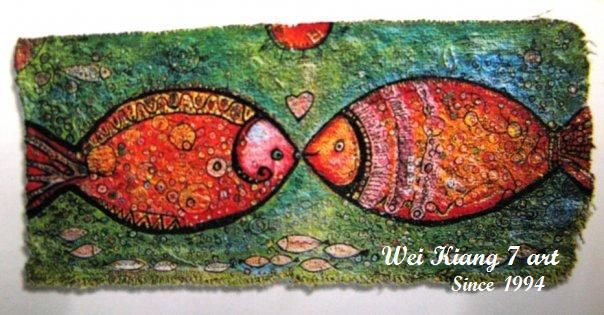
Wei Kiang Khor is an artist whose practice centers on painting, with a distinctive approach that brings together vibrant color, rich textures, mixed media, and symbolic imagery. His works explore the possibilities of painting as both a visual and tactile experience, creating compositions that encourage viewers to look beyond the surface and discover the layered narratives contained within.
Working with materials such as oil on gunny and mixed media on canvas, Khor demonstrates a willingness to experiment with different surfaces and techniques. His use of embossed elements further enhances the physical quality of his paintings, giving them a sense of depth and dimension.
Blending figurative subjects with abstract forms, Khor creates a visual language that is both recognizable and open to interpretation. Motifs such as fish and village scenes appear within his artistic vocabulary, suggesting connections to cultural memory, environmental surroundings, and personal experience.
A Practice Rooted in Painting
Painting is at the heart of Wei Kiang Khor’s artistic practice. His approach demonstrates an ongoing interest in how traditional painting techniques can be expanded through experimentation with materials, surfaces, and textures.
Rather than limiting himself to a single method, Khor explores a variety of approaches to create works with distinctive physical and visual qualities.
His paintings often combine recognizable imagery with abstract elements, allowing different forms of expression to exist within the same composition. This balance creates a sense of visual complexity, encouraging viewers to engage with the work at multiple levels.
At first glance, the audience may notice the vibrant colors or familiar subjects. Looking more closely, however, the textures, layered materials, and abstract forms reveal additional dimensions within the artwork.
The Tactile Quality of Gunny
One of the distinctive aspects of Khor’s practice is his use of gunny as a surface for oil painting. The naturally coarse texture of the material creates an interesting contrast with the fluidity and richness of oil paint.
Unlike a smooth canvas, gunny carries its own physical character. Its woven structure becomes part of the artwork, influencing how the paint is absorbed and how the surface appears.
This relationship between material and image contributes to the tactile quality of Khor’s paintings. The artwork becomes something that can be visually experienced through its textures and layers, giving the surface a stronger physical presence.
The use of gunny also adds an organic quality to the work, complementing the artist’s interest in subjects connected to nature, communities, and everyday environments.
Mixed Media and Embossed Techniques
Khor’s exploration of mixed media expands his creative possibilities even further. By incorporating different materials and embossed techniques into his work, he introduces physical depth that extends beyond traditional painted surfaces.
Embossing can create raised areas and subtle changes in the surface, allowing certain elements to become more prominent. These tactile details can guide the viewer’s attention and create a sense of movement across the composition.
The technique also reinforces the idea that a painting can be experienced through more than color and imagery. Texture becomes an important part of the visual language, creating a relationship between what the viewer sees and what they imagine they could physically feel.
This approach demonstrates Khor’s commitment to exploring the boundaries of painting and discovering new ways to communicate through the medium.
A Dialogue Between Figurative and Abstract Forms
Khor’s artistic language exists between figuration and abstraction. His paintings often contain recognizable subjects, but these forms are integrated into compositions that also feature abstract shapes, textures, and expressive color.
This combination gives his work a distinctive sense of ambiguity.
The figurative elements provide an entry point for the viewer. A fish, a village, or another familiar image can immediately establish a connection with the audience.
The abstract elements, however, encourage viewers to look deeper. They create space for personal interpretation, allowing the meaning of the artwork to extend beyond the literal subject.
This relationship between recognition and abstraction is central to the experience of Khor’s work. His paintings can be understood in different ways depending on how closely the viewer examines the relationship between the various elements.
The Symbolism of Fish
Fish are among the recurring motifs associated with Khor’s artistic vocabulary. As a subject, the fish carries a wide range of possible meanings, from connections to water and nature to ideas of movement, survival, abundance, and transformation.
Within Khor’s compositions, the fish can be seen as more than a literal representation of an animal. Its presence may encourage viewers to consider broader relationships between people and their environment.
The movement of fish also contrasts naturally with the static nature of painting. Through repeated forms, flowing lines, or expressive arrangements, Khor can suggest movement and rhythm within the fixed boundaries of the canvas.
This creates another layer of visual energy within his work.
Village Scenes and Cultural Memory
Village scenes also appear within Khor’s artistic vocabulary, bringing a sense of place and community into his compositions.
Such imagery can evoke memories of traditional environments and ways of life, particularly in a rapidly changing world. The village becomes not only a physical setting but also a symbol of belonging, heritage, and shared experience.
By combining these scenes with abstract forms and textured surfaces, Khor avoids presenting them as straightforward documentary images.
Instead, they become part of a broader visual narrative. The viewer may recognize elements of architecture, landscape, or community life while also encountering colors and forms that suggest memory and emotion.
This creates a sense that the village exists simultaneously as a real place and as a remembered or imagined environment.
Color as an Emotional Language
Color plays a significant role in Khor’s paintings. His vibrant compositions create a strong visual presence, while the interaction between different tones adds energy and depth.
His use of color can be understood as both descriptive and expressive. It can help establish the character of a scene while also communicating mood and emotion.
Bright colors may suggest vitality and movement, while deeper or contrasting tones can introduce complexity and visual tension.
Combined with his textured surfaces, color becomes part of a layered visual experience. The viewer encounters not only the subject represented within the painting but also the emotional atmosphere created through the interaction of color and material.
Connecting Subject, Material, and Meaning
One of the strengths of Khor’s practice is the relationship between his chosen subjects and his materials.
His use of organic surfaces, textured techniques, and mixed media complements his interest in fish, village scenes, and other figurative motifs.
The materials themselves can contribute to the meaning of the work. The physical texture of gunny may evoke associations with natural or everyday materials, while embossed elements create a sense of history and accumulated experience.
This connection between subject and material gives his paintings a cohesive quality. The surface is not simply a background for the image; it becomes part of the story.
Layered Narratives and Personal Interpretation
Khor’s paintings invite viewers to engage with narratives that are not always immediately explained.
Instead of presenting a single, definitive interpretation, his combination of figurative and abstract elements allows different meanings to emerge.
A village scene might evoke ideas of memory and cultural heritage for one viewer, while another may interpret it as a reflection on environmental change or community.
Similarly, a fish may represent nature and movement to one person while suggesting deeper symbolic meanings to another.
This openness is an important part of the appeal of his work. By leaving space for interpretation, Khor encourages viewers to become active participants in the experience of the painting.
An Evolving Artistic Language
Throughout his artistic journey, Wei Kiang Khor has developed a distinctive style built around the interaction of color, texture, material, and symbolism.
His willingness to work with oil on gunny, mixed media on canvas, and embossed techniques demonstrates a continuous interest in experimentation.
At the same time, his artistic identity remains grounded in painting. Whether exploring figurative imagery or moving toward abstraction, he consistently uses the canvas as a space for visual discovery.
His work demonstrates how painting can continue to evolve through the introduction of new materials and techniques while maintaining a connection to recognizable subjects and cultural ideas.
The Possibilities of Painting
Wei Kiang Khor’s artistic practice ultimately reflects a deep exploration of what painting can become. By combining vibrant colors, tactile surfaces, mixed media, and symbolic imagery, he creates works that exist between the physical and the conceptual.
His fish and village motifs provide connections to nature, place, and cultural memory, while his abstract forms allow those subjects to move beyond literal representation.
Through his use of gunny, embossed techniques, and mixed media, Khor also emphasizes the physical presence of the artwork, reminding viewers that paintings can be experienced not only through imagery but also through texture and material.
The result is a body of work that invites curiosity and close observation. Each composition offers layers to discover, from its immediate colors and forms to the deeper associations suggested by its symbols and materials.
Ultimately, Wei Kiang Khor’s paintings demonstrate the power of combining traditional artistic practice with experimentation. His distinctive balance of figurative imagery and abstraction, supported by rich textures and expressive color, creates a visual language that encourages viewers to explore the relationships between memory, culture, environment, and personal experience. Through this ongoing exploration, Khor continues to reveal the possibilities of painting as a medium capable of carrying both visual beauty and layered meaning.