



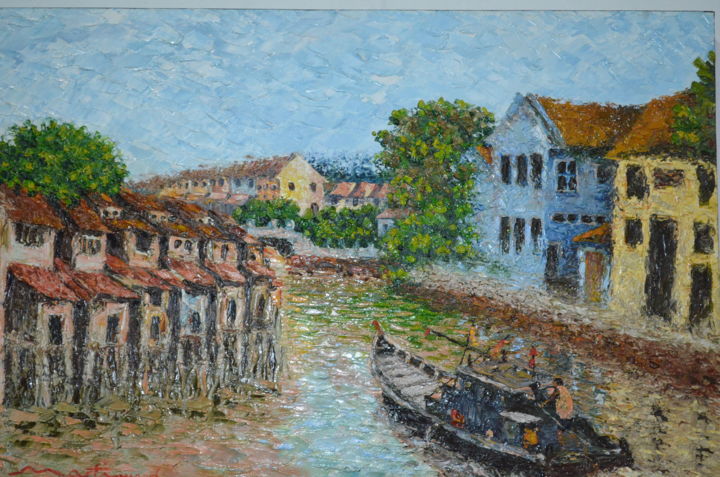
Martin Wood-Malacca is an artist whose work is deeply connected to the architectural, historical, and cultural character of Malacca, Malaysia. Through painting, he captures the distinctive atmosphere of the city’s historic waterways, heritage streets, traditional buildings, and lively urban spaces.
Working primarily with acrylic and oil paints on canvas, Martin explores the character of Malacca through a variety of artistic approaches. His work moves between impressionism and cubism, allowing him to present the city from different visual perspectives. While his impressionistic paintings often evoke nostalgia and the quiet charm of old river scenes and traditional houses, his cubist compositions emphasize the energy, structure, and architectural complexity of the city’s streets.
Through his art, Martin Wood-Malacca creates a visual record of a place where history, culture, architecture, and contemporary life exist side by side. His paintings celebrate the distinctive identity of Malacca while presenting its familiar landscapes through a contemporary artistic perspective.
A Deep Connection to Place
The city of Malacca is at the heart of Martin Wood-Malacca’s artistic practice.
Rather than treating the urban environment simply as a collection of buildings and streets, Martin approaches it as a living landscape shaped by history and cultural interaction.
The city’s waterways, heritage architecture, traditional houses, and busy streets provide him with an extensive collection of subjects.
Each location carries its own atmosphere and story. A quiet riverbank may evoke memories of an earlier era, while a crowded heritage street can reflect the movement and energy of contemporary life.
Through painting, Martin brings these different aspects together, creating artworks that explore both the physical appearance and emotional character of the city.
Capturing Historic Waterways
The waterways of Malacca are an important source of inspiration for Martin’s work.
These scenes offer opportunities to explore reflections, architecture, natural surroundings, and the changing qualities of light.
In his more impressionistic paintings, the waterways can appear calm and nostalgic. Soft variations in color and expressive brushwork help convey the atmosphere of an older Malacca, where traditional structures and historic environments create a sense of timelessness.
These paintings are not simply architectural records. They capture the mood associated with places that have witnessed generations of change.
The river becomes a connection between the past and present, allowing Martin to reflect on the city’s evolving identity while preserving the atmosphere of its historic environment.
The Nostalgia of Traditional Architecture
Traditional houses and historic buildings frequently appear in Martin’s paintings.
These structures provide a visual connection to the city’s past and serve as reminders of its architectural heritage.
Through his impressionistic approach, Martin emphasizes the textures, colors, and weathered surfaces that give older buildings their distinctive character.
His paintings can evoke a feeling of nostalgia, inviting viewers to imagine the history contained within these familiar streets and structures.
The old buildings are presented not merely as architectural subjects but as important parts of the cultural memory of the city.
By bringing them to the canvas, Martin contributes to a visual celebration of the heritage that continues to define Malacca.
Impressionism and the Atmosphere of Memory
Impressionism plays an important role in Martin Wood-Malacca’s artistic vocabulary.
Through this approach, he can focus on atmosphere, light, color, and emotion rather than precise architectural detail.
His impressionistic works often communicate the peaceful and nostalgic qualities associated with historic parts of the city.
Brushwork becomes an important part of the storytelling process. Rather than describing every detail literally, Martin uses color and painterly marks to suggest the character of a location.
This approach allows viewers to experience the city emotionally as well as visually.
The result is a sense of atmosphere that can make familiar places appear dreamlike, encouraging viewers to consider not only what the city looks like but also how it feels.
The Dynamic Energy of Cubism
While impressionism allows Martin to explore the quieter and more nostalgic aspects of Malacca, cubism offers him a way to capture the city’s energy and architectural complexity.
Through geometric forms and fragmented perspectives, he can reinterpret buildings, streets, and urban spaces.
Cubist influences allow him to move away from traditional perspective and explore architecture through multiple visual angles.
This approach is particularly effective when depicting busy streets and densely arranged buildings.
The resulting compositions can feel more energetic and dynamic, reflecting the movement and vitality of urban life.
By incorporating cubist elements, Martin demonstrates that the same city can be understood through very different artistic perspectives.
A Dialogue Between Past and Present
One of the central themes within Martin Wood-Malacca’s work is the relationship between history and contemporary life.
Malacca is a city where historic architecture exists alongside modern activity.
Traditional buildings, heritage streets, places of worship, businesses, and everyday urban life all contribute to the character of the city.
Martin’s paintings explore this coexistence.
His work recognizes the importance of preserving the past while acknowledging that cities are constantly changing.
Through different artistic styles, he presents both sides of this experience. Impressionism can evoke memories and historical atmosphere, while cubism can express the energy of a changing urban environment.
Together, these approaches create a visual conversation between what the city was and what it continues to become.
Celebrating Cultural Diversity
Martin Wood-Malacca’s artistic vision also reflects the cultural diversity found throughout the city.
Malacca is known for the presence of different cultural traditions and places of worship existing within a shared urban environment.
Martin explores this coexistence through his paintings, highlighting the peaceful relationships between different cultural and religious spaces.
These subjects allow his work to move beyond architecture and toward broader ideas of community and harmony.
The buildings he paints represent more than physical structures. They also symbolize the diverse communities that have contributed to the identity of the city over generations.
Through his visual interpretations, Martin celebrates this diversity as an essential part of Malacca’s cultural character.
Heritage Streets Full of Life
The heritage streets of Malacca provide another important source of inspiration.
Unlike the quieter waterways and traditional residential scenes, these streets often contain a greater sense of movement and activity.
People, buildings, signs, colors, and architectural details come together to create a visually complex environment.
Martin’s use of cubist influences allows him to interpret this complexity through simplified forms and dynamic compositions.
The streets become energetic visual spaces where different elements interact.
Through these paintings, he captures the character of a city that remains connected to its heritage while continuing to function as a living and evolving urban environment.
Acrylic and Oil on Canvas
Martin works primarily with acrylic and oil paints on canvas, using the qualities of each medium to support his artistic exploration.
Acrylic paint offers versatility and allows him to build vibrant colors and expressive surfaces.
Oil paint, meanwhile, provides richness and depth, making it possible to explore subtle variations in tone and texture.
Working on canvas gives Martin a flexible foundation for both his impressionistic and cubist approaches.
The choice of medium contributes to the visual character of each painting, allowing him to adapt his technique according to the subject and the mood he wants to create.
His use of multiple mediums reflects the broader diversity of his artistic practice.
Texture, Color, and Architectural Character
Texture and color are particularly important in Martin’s depictions of Malacca.
The weathered walls of old buildings, the surfaces of traditional houses, and the colors found throughout heritage streets all contribute to the visual identity of the city.
Through expressive painting techniques, Martin emphasizes these qualities.
His work demonstrates how architecture can be experienced not only through its structure but also through its surfaces and colors.
The textures of an old building can suggest the passage of time, while bright architectural details can communicate the energy of contemporary street life.
This attention to visual detail allows Martin to create paintings that feel strongly connected to their surroundings.
Painting a UNESCO Heritage Environment
The historical and architectural significance of Malacca provides an important context for Martin’s work.
The city’s heritage environment contains layers of history that can be seen in its buildings, waterways, streets, and cultural landmarks.
Martin’s paintings help bring attention to these elements by transforming them into subjects of artistic contemplation.
His work serves as a reminder that heritage is not simply about preserving physical structures. It is also about maintaining the stories, memories, and cultural relationships connected to those places.
By painting Malacca through different artistic styles, Martin creates a visual narrative that honors the city’s heritage while allowing it to be interpreted through a contemporary lens.
A Contemporary View of Historical Memory
Martin Wood-Malacca’s artistic practice demonstrates how painting can serve as a bridge between historical memory and contemporary artistic expression.
His work is grounded in the specific environment of Malacca, yet his approach is not limited to documentary representation.
Instead, he interprets the city through emotion, color, movement, and artistic experimentation.
His impressionistic works invite viewers to reflect on the peaceful and nostalgic qualities of historic spaces, while his cubist compositions reveal the dynamic energy of architecture and urban life.
Together, these approaches offer a multifaceted portrait of Malacca.
Preserving the Spirit of a City Through Art
Ultimately, Martin Wood-Malacca’s paintings are a celebration of place.
Through his depictions of waterways, traditional buildings, heritage streets, and culturally significant spaces, he captures the unique spirit of Malacca.
His work demonstrates a deep appreciation for the city’s history while recognizing the vitality of its contemporary life.
By blending impressionism and cubism, Martin creates a visual language that can express both the quiet beauty of memory and the dynamic energy of change.
His paintings invite viewers to look closely at the environments that surround them and to recognize the stories embedded within architecture, streets, and landscapes.
In doing so, Martin Wood-Malacca transforms familiar scenes into thoughtful artistic narratives. His work honors the past while remaining open to contemporary interpretation, creating paintings that celebrate the cultural diversity, architectural richness, and enduring character of a historic city. Through color, texture, expressive brushwork, and varied artistic styles, he continues to present Malacca as a place where history and modern life exist in vibrant and meaningful dialogue.