



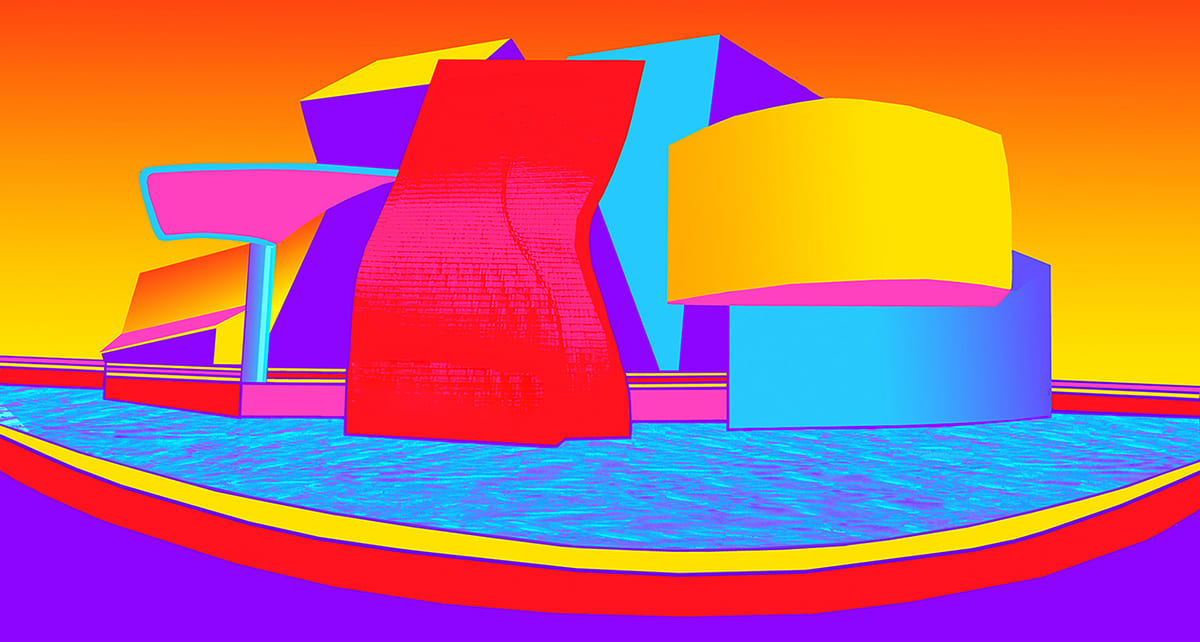
Before there was a body of work, there was a decision. Jane Gottlieb did not arrive at her distinctive photographic style through a straight line from art school to gallery wall. She arrived at it the way most artists eventually do: slowly, through false starts, professional detours, and the gradual accumulation of confidence in her own instincts.
From the Classroom to Madison Avenue
Gottlieb’s foundation was academic. She studied at UCLA and later at Berkeley, institutions that gave her a grounding in the fundamentals of art before she ever set out to build a career around a camera. That path did not lead directly into the art world. Instead, Gottlieb spent time working on Madison Avenue, moving through various positions across different companies in the years that followed.

It is tempting, looking back at an artist’s mature work, to treat the years before recognition as a mere prologue. But for Gottlieb, that period was formative in a more direct way. Working across different corporate environments exposed her to structure, deadlines, and other people’s visions of what creative work should look like. It also, eventually, showed her what she did not want: a career built entirely around executing someone else’s ideas.
The Turn Toward Instinct
The pivotal shift in Gottlieb’s story is not a single dramatic event but a gradual realization. Somewhere in the accumulation of those professional years, she recognized that her greatest creative freedom would come not from finding the right mentor or the right institution, but from trusting herself. She chose to experiment on her own terms rather than wait for validation or guidance from an established figure in the field.
That is a harder path than it sounds. Without a mentor to provide a shortcut through the usual uncertainties, Gottlieb had to build her own sense of what worked, largely through trial and error. She has been candid about the fact that confidence as an artist does not arrive quickly. It takes time, sustained effort, and the willingness to keep working through disappointment, including the specific disappointment of showing work to an audience that does not immediately understand it.
Learning Not to Need Agreement
There is a particular kind of resilience required to keep making art that others do not immediately embrace, and Gottlieb’s development seems to hinge on exactly that. She has come to accept that an artist cannot expect universal understanding or appreciation, and that withholding a piece of work simply because it might be misread is its own kind of creative failure. That acceptance freed her, in practice, to pursue directions that a more consensus-driven artist might have abandoned.

This is where Gottlieb’s personal and artistic development become difficult to separate. The confidence to experiment with color and light in unconventional ways is inseparable from the personal work of learning to withstand indifference or misunderstanding. Her photography did not become bolder because a single mentor told her it was good. It became bolder because she decided, over years of practice, that her own judgment was sufficient reason to continue.
Where Architecture Enters the Story
That trust in her own instincts eventually extended to one of the more distinctive threads in her career: her long relationship with the architecture of Frank Gehry. Gottlieb photographed for Gehry many years ago, early enough that the relationship predates much of her later recognition, and she has remained an admirer of his work ever since. Her photographs of his buildings in Bilbao and Los Angeles represent a return to that early connection, filtered through decades of additional experience.
By the time she turned her camera on Gehry’s architecture in a sustained way, Gottlieb was no longer simply recording what she saw. She was painting, combining, and enhancing her photographs using Photoshop and her own imagination, treating Gehry’s structures as raw material for further invention rather than as finished subjects to be faithfully reproduced. It is not hard to see why his work appealed to her instincts specifically. Gehry’s buildings already refuse convention. Gottlieb’s approach to photographing them does the same.
The Long Reward of Persistence
Today, Gottlieb’s photographs are exhibited by galleries, museums, and universities around the world, and her contributions to the arts were further recognized through her appointment as the first artistic trustee on the board of the University of California, Santa Barbara. Neither of those milestones came quickly, and neither would have been possible without the earlier, less visible years of trial and uncertainty on Madison Avenue and beyond.
What Gottlieb’s story ultimately offers is not a tidy formula for artistic success but something more useful: a demonstration that creative confidence is built, not given. She did not wait for permission to see the world in color. She built the permission herself, one uncertain project at a time, until instinct became a body of work substantial enough to speak for itself.
Discover thirty years of creative evolution, from early experiments to internationally exhibited series. Browse Jane Gottlieb’s retrospective collections at janegottlieb.com.