



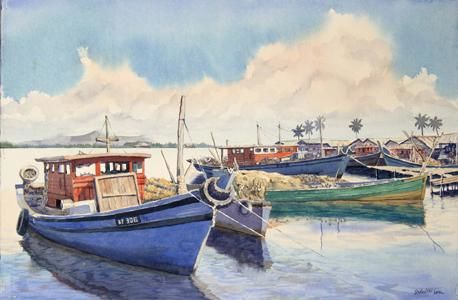
M Shahrin Shaari is an artist whose creative practice centers on painting and explores a diverse range of subjects through different materials and techniques. His work includes portraits, landscapes, and scenes inspired by natural and cultural environments, reflecting a thoughtful observation of the world around him.
Working across oil on canvas, watercolor, and pastel on paper, Shahrin demonstrates versatility in his approach to painting. His artistic practice moves between different mediums and visual styles, allowing him to explore the qualities of color, form, atmosphere, and texture in distinctive ways.
Many of his works draw inspiration from coastal and rural environments, revealing a close connection to the Malaysian landscape and the everyday experiences found within it. Through his paintings, Shahrin transforms observations of familiar places and surroundings into compositions that combine representational imagery with elements of abstraction.
A Practice Centered on Painting
Painting is at the heart of M Shahrin Shaari’s artistic practice. His body of work demonstrates an ongoing interest in observing and interpreting the world through visual expression.
Rather than restricting himself to one particular subject, Shahrin explores a variety of themes, including portraits and landscapes. This diversity allows him to examine different aspects of visual experience, from the human figure to the broader environments in which people live.
His paintings reveal an interest in the relationship between subject and atmosphere. Whether focusing on a person or a landscape, he considers how color, form, and composition can work together to communicate the character of a particular scene.
This approach gives his work a sense of visual flexibility while maintaining a consistent interest in careful observation.
Exploring Different Mediums
One of the defining features of Shahrin’s artistic practice is his use of diverse materials.
He works with oil on canvas, watercolor, and pastel on paper, allowing him to explore different visual possibilities across each medium.
Oil painting provides a rich and versatile surface through which he can develop color, depth, and texture. The medium allows for careful layering and the creation of subtle variations in tone.
Watercolor, by contrast, offers a sense of transparency and fluidity. Its delicate qualities make it particularly suited to capturing atmosphere and the changing appearance of natural environments.
Pastel provides another avenue for exploration, offering a direct and expressive way to work with color and mark-making on paper.
By moving between these mediums, Shahrin demonstrates an openness to experimentation and a willingness to adapt his techniques according to the subject and artistic intention.
Landscapes Inspired by the Malaysian Environment
The Malaysian landscape plays an important role in Shahrin’s artistic world.
His paintings often explore coastal and rural settings, reflecting an appreciation for the natural environments that shape everyday life.
Coastal scenes provide opportunities to explore the interaction between land, water, sky, and light. These elements can create constantly changing visual conditions, allowing the artist to examine variations in color and atmosphere.
Rural landscapes offer a different perspective. They can reveal quieter environments, traditional ways of life, and the relationship between communities and the land around them.
Through these subjects, Shahrin captures more than the physical appearance of a location. His paintings suggest an interest in the atmosphere and character of these environments, transforming familiar scenes into thoughtful visual experiences.
Observing Everyday Life
A significant aspect of Shahrin’s work is his engagement with everyday surroundings.
His choice of coastal and rural subjects suggests an appreciation for ordinary places and experiences that might otherwise be overlooked.
Rather than focusing exclusively on dramatic or extraordinary scenes, his paintings find artistic value in familiar environments.
This approach reflects the idea that everyday life can provide endless inspiration for an artist who observes carefully.
A rural landscape, a coastal view, or a familiar figure can become the starting point for exploring broader ideas about place, identity, memory, and human experience.
Through painting, Shahrin gives these subjects a renewed sense of attention, encouraging viewers to consider the visual and emotional qualities of the environments around them.
The Human Figure and Portraiture
In addition to landscapes, M Shahrin Shaari’s artistic practice includes portraiture.
The portrait provides an opportunity to explore the individual through form, expression, color, and composition.
While landscape painting focuses on the relationship between people and their environments, portraiture turns attention toward the human subject.
Shahrin’s interest in both areas demonstrates the breadth of his artistic concerns. He is equally engaged with the intimate qualities of the individual and the broader visual world that surrounds them.
His portraits can be viewed as part of a larger exploration of observation. Just as he studies the atmosphere of a landscape, he examines the distinctive qualities of the people he portrays.
Between Representation and Abstraction
Shahrin’s paintings combine representational and abstract elements, creating a visual language that allows him to move between recognizable imagery and more expressive forms.
The representational aspects of his work provide viewers with a clear connection to the subject. A landscape remains identifiable as a particular environment, while a portrait retains its connection to the human figure.
At the same time, abstract elements introduce another level of interpretation.
Color, shape, and brushwork may become more important than literal accuracy, allowing the artist to express mood and atmosphere rather than simply reproduce what he sees.
This balance gives his paintings a distinctive character. They remain connected to the visible world while also demonstrating the freedom of artistic interpretation.
The Role of Color
Color is an important component of Shahrin’s visual language.
His work demonstrates a thoughtful engagement with the relationships between different colors and the ways in which they can influence the mood of a composition.
In landscapes, color can help communicate the atmosphere of a particular environment. Variations in the sky, water, vegetation, and surrounding structures can establish a sense of time and place.
In portraits, color can contribute to the emotional character of the subject.
Shahrin’s use of color also supports the abstract qualities within his work. By emphasizing relationships between tones and forms, he can move beyond straightforward representation and create compositions that engage viewers on a more emotional level.
Form and Composition
Alongside color, Shahrin’s practice reflects a careful consideration of form and composition.
The arrangement of elements within a painting influences how the viewer moves through the image and experiences the subject.
In landscapes, this may involve balancing the horizon, natural forms, architectural elements, or figures within the scene.
In portraits, composition helps establish the relationship between the subject and the surrounding space.
His ability to work across different genres demonstrates an understanding of how composition can shape the meaning and atmosphere of a painting.
A Connection to Place
The recurring presence of coastal and rural environments suggests that place is an important concept within Shahrin’s work.
His paintings can be viewed as visual reflections on the landscapes and communities that form part of everyday life.
By focusing on these environments, he creates a connection between artistic observation and cultural experience.
The landscapes he depicts are not simply backgrounds. They can represent memories, traditions, and ways of life.
This connection to place gives his work a sense of cultural context while allowing the paintings to remain open to broader interpretations.
A Distinctive Visual Language
Through his exploration of different subjects and materials, M Shahrin Shaari has developed a distinctive visual language.
His practice brings together oil, watercolor, and pastel, while moving between portraits, landscapes, and scenes inspired by natural and cultural environments.
The diversity of his work is unified by his thoughtful approach to observation.
Whether depicting a person or a landscape, Shahrin pays attention to the relationships between form and color. His work demonstrates an interest in both the recognizable qualities of the subject and the expressive possibilities that emerge when the artist interprets it through paint.
This balance between observation and interpretation is central to the character of his paintings.
An Ongoing Exploration of the World Around Him
M Shahrin Shaari’s artistic practice reflects a continuous engagement with the world around him.
His paintings capture aspects of the Malaysian landscape and everyday life while exploring broader questions of visual perception and artistic expression.
By working across different mediums, he is able to approach each subject from a fresh perspective. Oil allows him to explore richness and depth, watercolor offers fluidity and transparency, and pastel provides an immediate relationship between color and surface.
Together, these techniques contribute to a varied and evolving body of work.
Ultimately, M Shahrin Shaari’s paintings demonstrate the value of attentive observation. Through portraits, coastal views, rural environments, and other subjects drawn from natural and cultural surroundings, he transforms familiar experiences into thoughtful works of art.
His combination of representational imagery and abstract elements creates a visual language that is both accessible and open to interpretation. Through his considered use of color, form, and composition, Shahrin continues to explore the relationship between the visible world and the expressive possibilities of painting, creating artworks that reflect a deep appreciation for place, atmosphere, and everyday life.